井月を囀(さえず)る Chirping a haiku by Seigetsu 明け安き夜を日に継ぐや 2026.06.02
ザッと内容を見る
はじめに Introduction
こんにちは! 篶囀(えんてん)です。
ここ数日、ずいぶんと暑くなってきましたね。
特に暑がりでなくても、少しの行動で汗をかきやすくなっています。
仕事中はもちろん、外出の際の水分補給も欠かせません。
やはり、今年の夏も「猛暑やむなし!」でしょうか。
さて、ヨーロッパで6月といえば『ジューンブライド(6月の花嫁)』。新緑が美しくて、晴れの日が多いからというのがルーツの一つだそうですが、日本では緑が濃くなる時期としては共感できますが、晴れの日が多い・・という点に関しては??となります。
だって梅雨の真っただ中ですから、ネエ。
井月:今宵の一句 Seigetsu:A haiku for tonight
明け安(易)き 夜を日に継や 水車
あけやすき よをひにつぐや みずぐるま
夏は昼が長く、夜が短い。この「夜が短い」を井月は、「すぐに夜が明けてしまう」と体感したのです。
しかも、夜が明けてそれで終わるのでなく「日に継ぐ」と表現したわけは、昼でも夜でも黙々と働き続ける水車を見て、「これは竹風だ!」と即座に脳裏に浮かんだからでしょう。
この句には前書きとして「竹風子の勉励を」と記されています。
※ 竹風は俳友でもあり、井月にとっては弟子でもあったので、竹風の後に『子』という敬称(愛称)を付しています。これは「〇〇君」等と同様の意味合いで、呼び捨てにしないで敬意や親しみを込める俳句の世界では古くからある慣習だそうです。
復本一郎編「井月句集」より
竹風子の勉励を
明け易き夜を日に継ぐや水車
〇 竹風子 俳人。 「竹松銭弥、富県村南福地の人、昭和三年春歿八十六歳」(底本頭注)。
〇 「水車」の動きに竹風の勉励を重ねた。
Akeyasuki yo o hini tuguya Mizuguruma
In summer, the days are long and the nights are short. By saying that “the night is short,” Seigetsu was expressing the feeling that dawn comes almost at once.
What is more, he did not simply describe the night as ending with daybreak. Instead, he wrote that it “carries on into the day.” Most likely, as he watched a waterwheel tirelessly turning and working through both day and night, the thought instantly crossed his mind: “This is Chikufū!”
This interpretation is supported by the prefatory note attached to the haiku:
“On the diligence of Chikufū.”
Note: Chikufū was not only a fellow haiku poet but also, in a sense, a disciple of Seigetsu. For that reason, Seigetsu refers to him as “Chikufū-shi” (竹風子), adding the suffix -shi (子) after his name. In the haiku world, this was a traditional form of address used to convey respect and affection, much like saying “Mr. Chikufū” or “young Chikufū,” rather than referring to someone by name alone. It reflects the long-standing poetic custom of expressing both esteem and familiarity.
From “Seigetsu(井月)Haiku Collection” edited by Ichiro Fukumoto:
Chikufuu’s diligence
Akeyasuki yo o hini tuguya Mizuguruma
(明け易き夜を日に継ぐや水車)
〇 Chikufuu: Haiku poet. “Chikumatsu Zenya, a native of Minamifukuchi, Tomikata Village, died in the spring of 1928 at the age of 86” (Note in the original text).
〇 The movement of the “waterwheel” is superimposed on Chikufuu’s diligence.
篶囀の思い描く『井月像』 Enten’s vision of Seigetsu
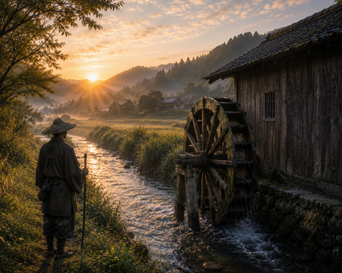
夏の朝靄の中で半分眠った世界が
静かに働き始める。
【画像は生成AIを使用して作成しています】
A waterwheel that continues night into day…
In the summer morning mist, a half-sleeping world
begins to work quietly.
句碑近景
Close-up of the haiku monument
この句の碑が伊那市内に2つあります。
There are two monuments inscribed with this haiku in Ina City.
①三峰川サイクリング・ジョギングロード
① Mibukawa Cycling/Jogging Road
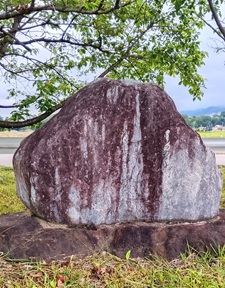
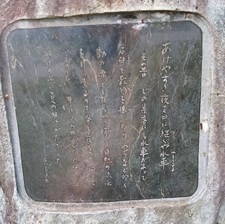
The photo on the left shows the front of the haiku monument. The back on the right reads: “In the old days, every village had a waterwheel, which was used as a power source for pounding grain with a millstone or beating straw. Because it drew natural flowing water, it turned rapidly both day and night. What Mr. Igetsu saw was the early summer dawn. Written by Gurashi.”
②伊那市西春近上島(竹林苑庚申窪)
② Nishiharuchika Kamijima, Ina City (Chikurin-en Koshinkubo)
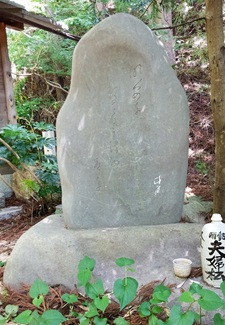
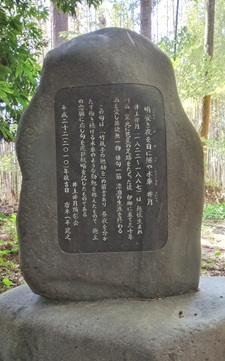
↑ Left = Front of the haiku monument Right = Back of the haiku monument
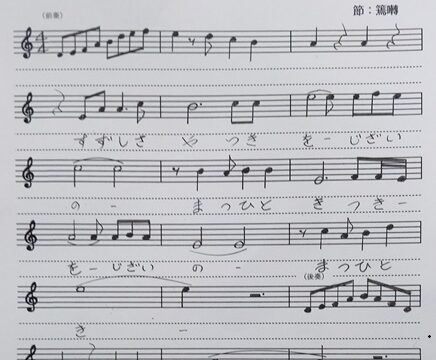
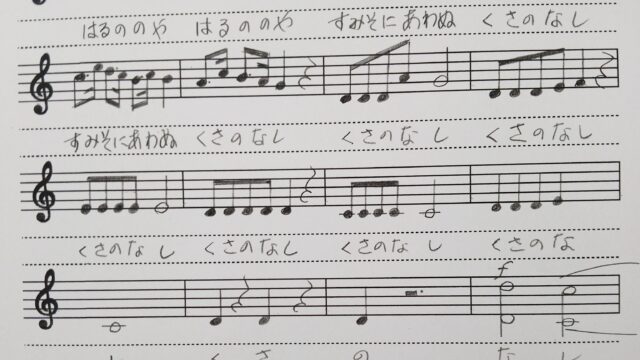
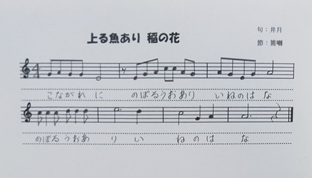
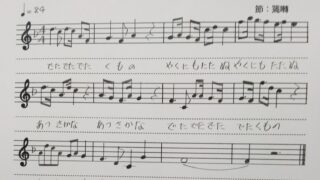
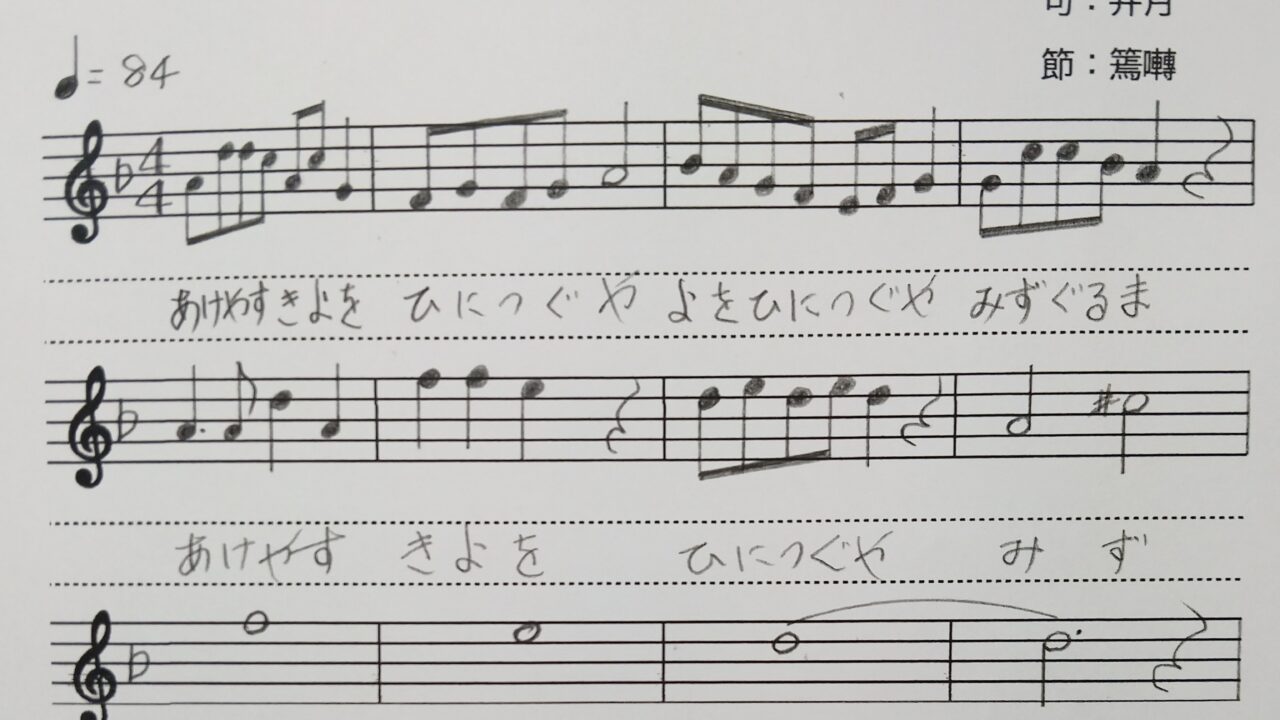
旋律譜:melody score
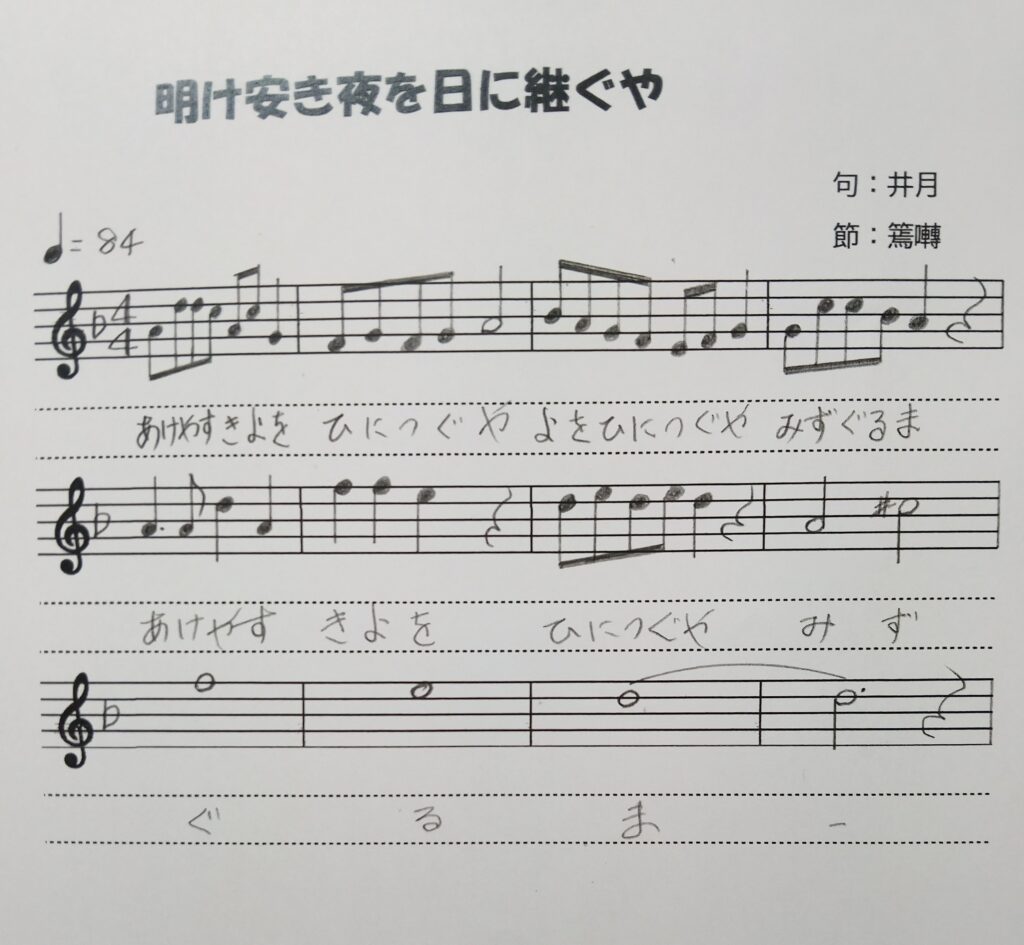
水車のように坦々と、マイペースで囀りましょう。
Don’t rush, don’t panic, but don’t be too slow either.
Sing steadily and calmly, like a waterwheel, at your own pace.
鼻歌で囀ってみたよ
♬ I tried humming a tune
あとがき Afterword
五月晴れというとスッキリした空の青さを思い浮かべますが、今年の5月はどんより曇り空が多かったという印象を持ったのは私だけでしょうか?
さて、次回の旋律譜は
です。
2026.06.02㈫