井月を囀(さえず)る Chirping a haiku by Seigetsu 櫻にも月にも 2026.04.16
ザッと内容を見る
はじめに
Introduction
4月というのに、朝晩の厳しい寒さにストーブなどの暖房器具が手放せないですね。
まあ、日中は汗ばむ日も多くなってきていますからもう少し辛抱しましょうか。
さて、待ち望んでいた桜も足早に盛りを過ぎ、道端ではタンポポ、水仙、クロッカス、いろんな花が ”これでもか!” と言わんばかりに咲き乱れております。
春真っ盛りの状況は前々回の 「イヨ~ ポンポン」 を思い出します。
井月:今宵の一句
Seigetsu:A haiku for tonight
『 桜にも 月にもかかる 朧かな 』
本来、存在する場所も性質も全く異なる桜と月。
手を伸ばせばすぐ触ることのできる桜に対して、遥か彼方の空にあり手が届かない月がともに『朧』によって包まれ霞んでいる情景。
井月は心地よい一種の恍惚感を感じているのではないか。
『 Sakura nimo Tsuki nimo kakaru Oboro kana 』
Cherry blossoms and the moon, whose natural habitats and characteristics are fundamentally different.
The cherry blossoms, which can be touched with a single reach, and the moon, which is far away in the sky and unreachable, are both shrouded in a hazy, obscured light.
Perhaps Seigetsu is experiencing a pleasant, almost ecstatic feeling.
句碑近景 Close-up of the haiku monument
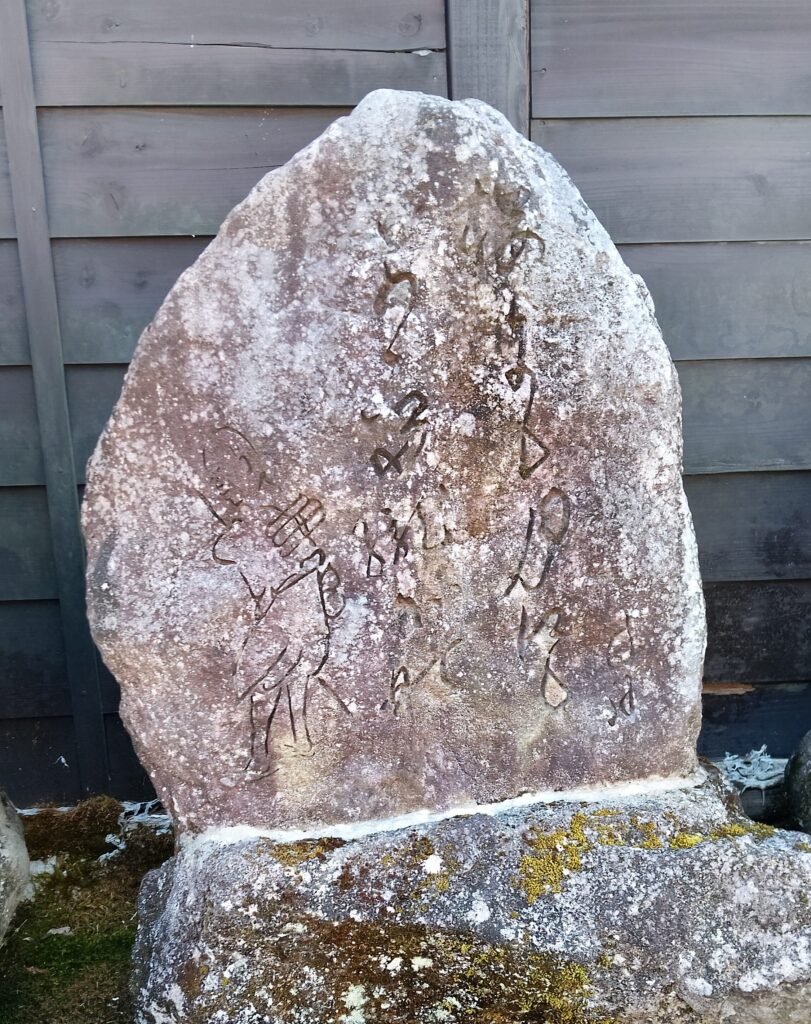
(伊那市美篶笠原)
A monument inscribed with the haiku “A hazy mist hangs over both the cherry blossoms and the moon” and a portrait of Seigetsu.
(Misuzu Kasahara, Ina City)
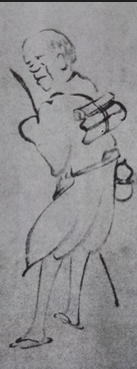
井月の句を後世に残した医師:下島勲氏が少年時代の記憶(印象)をもとに描いたとされる井月の姿絵
A portrait of Seigetsu, supposedly drawn by Dr. Isao Shimojima, the physician who preserved Seigetsu’s haiku for posterity, based on his childhood memories (impressions).
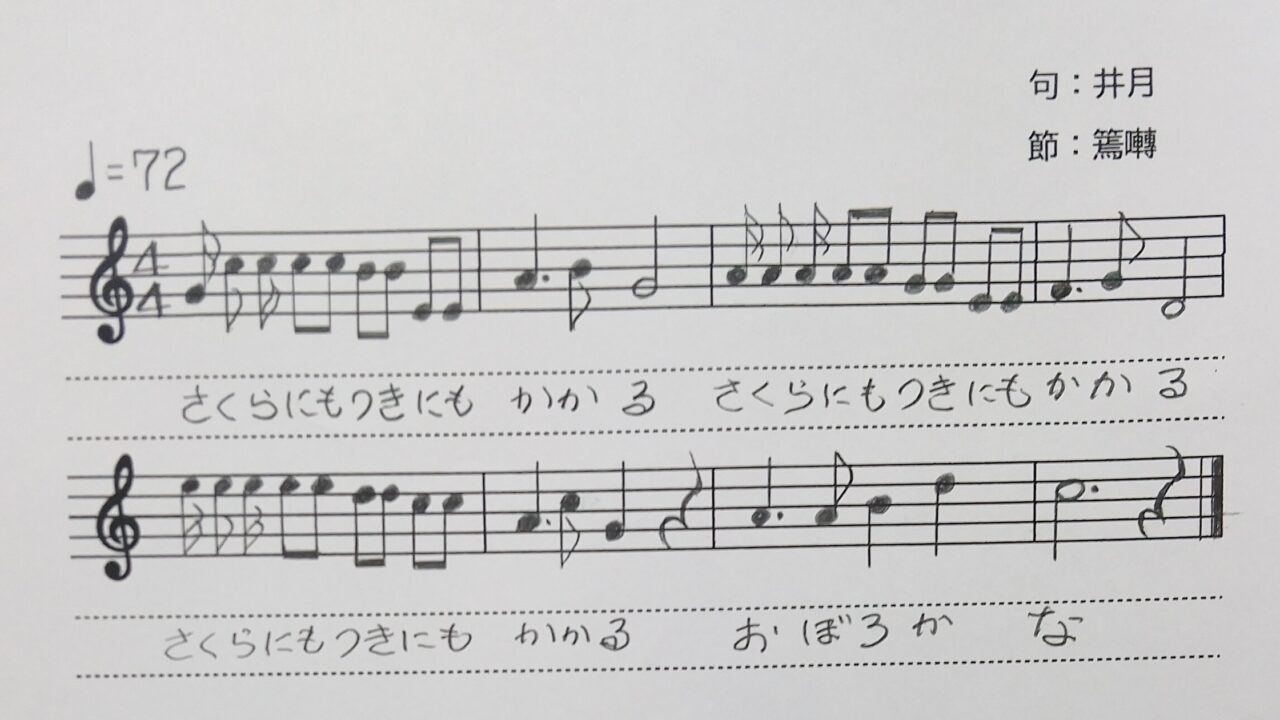
旋律譜:桜にも月にも Melody score: To celebrate
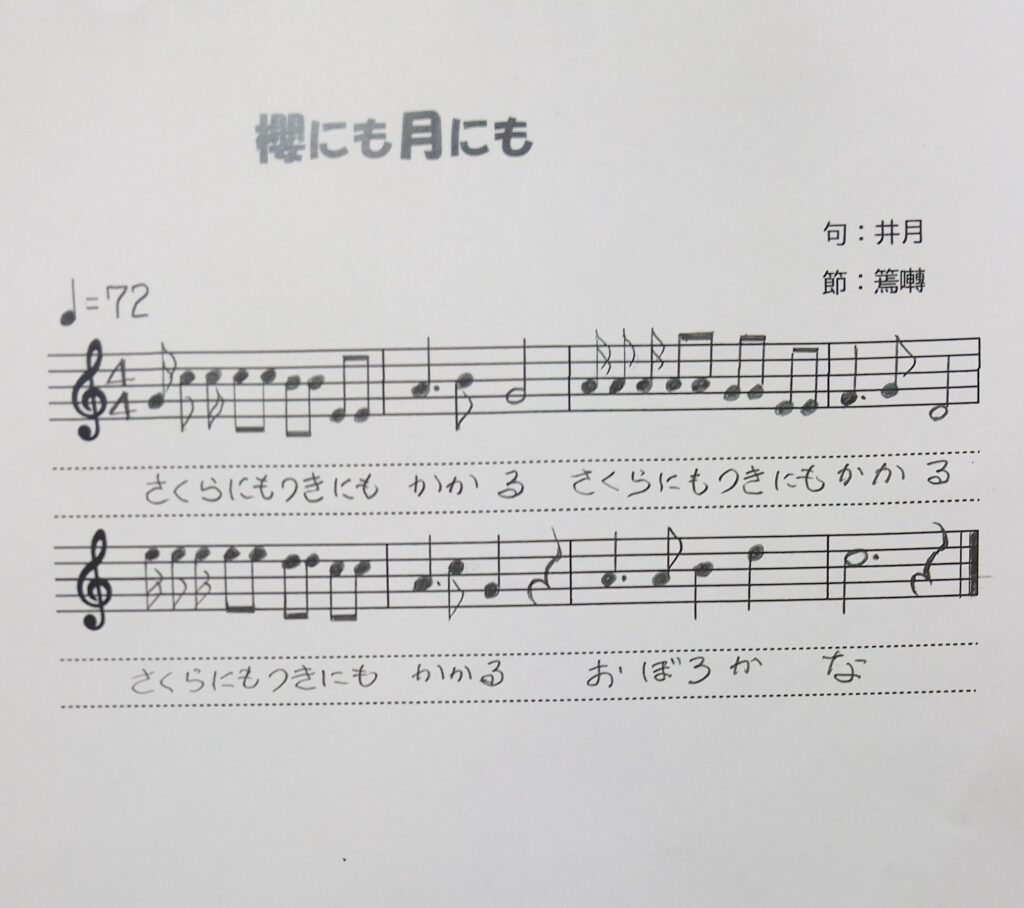
まさに鼻歌の境地!
Humm~と口ずさむと鼻から旋律が出ていく、さらに続いてHumm~となるからまるで
囀(さえず)っている感覚になる。
この旋律の狙い
桜にも月にもかかる 桜にも月にもかかる と囀って、さらに 桜にも月にもかかると続くと、いったい何が桜と月にかかるんだ? と思わせぶりが鼻に引っかかる。
するとそのあとにたった一言 『朧かな』ときたモンだ。
It’s truly the realm of humming!
Humming “Humm~” makes the melody come out of your nose, and then it continues with “Humm~,” giving you the feeling of
singing.
The intention behind the structure of this song
Singing ” veils both the cherry blossoms and the moon, veils both the cherry blossoms and the moon” and then it continues “iveils both the cherry blossoms and the moon,making you wonder, “What applies to veils both the cherry blossoms and the moon?”
Then, just one word comes after it: “Oboro kana” (hazy/mist).
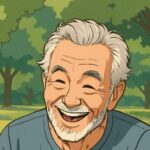
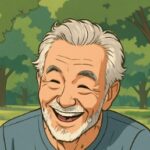
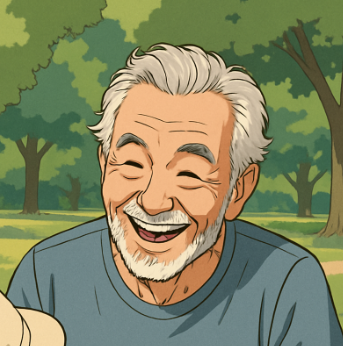
篶囀の思い描く『井月像』
Enten’s vision of Seigetsu
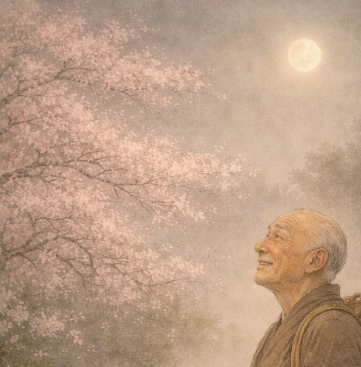
その顔はどこまでも穏やかであった。
In the hazy sky, Seigetsu gazes up at the cherry blossoms and the moon.
His face was utterly serene.
あとがき
Afterword
そういえば、昔修学旅行で行った京都でバスのガイドさんが歌ってくれた「祇園小唄」を思い出しました。
祇園の四季を一番から四番まで織り込んだ、その冒頭で
「月はおぼろに東山 霞む夜ごとのかがり火に 夢もいざよう紅桜・・・」
と歌っています。
この歌、昭和5年の映画の主題歌で当時大ブレイクしたということですが、やっぱり「桜」と「月」が見事に『朧』で溶け合っています。
さて、次回の旋律譜は
です。
(時期的には少し早いかもしれませんが・・)
2026.04.16 ㈭
○The guide for this blog is Enten(篶囀).
○This blog primarily features haiku by Seigetsu(井月).
○I’m humming the haiku I introduced, with a melody added to it.
○The author of this blog is Kakigui Houryu(柿食法隆).