ザッと内容を見る

はじめに                                                                                                                         Introduction

 こんにちは! 篶囀(えんてん)です。
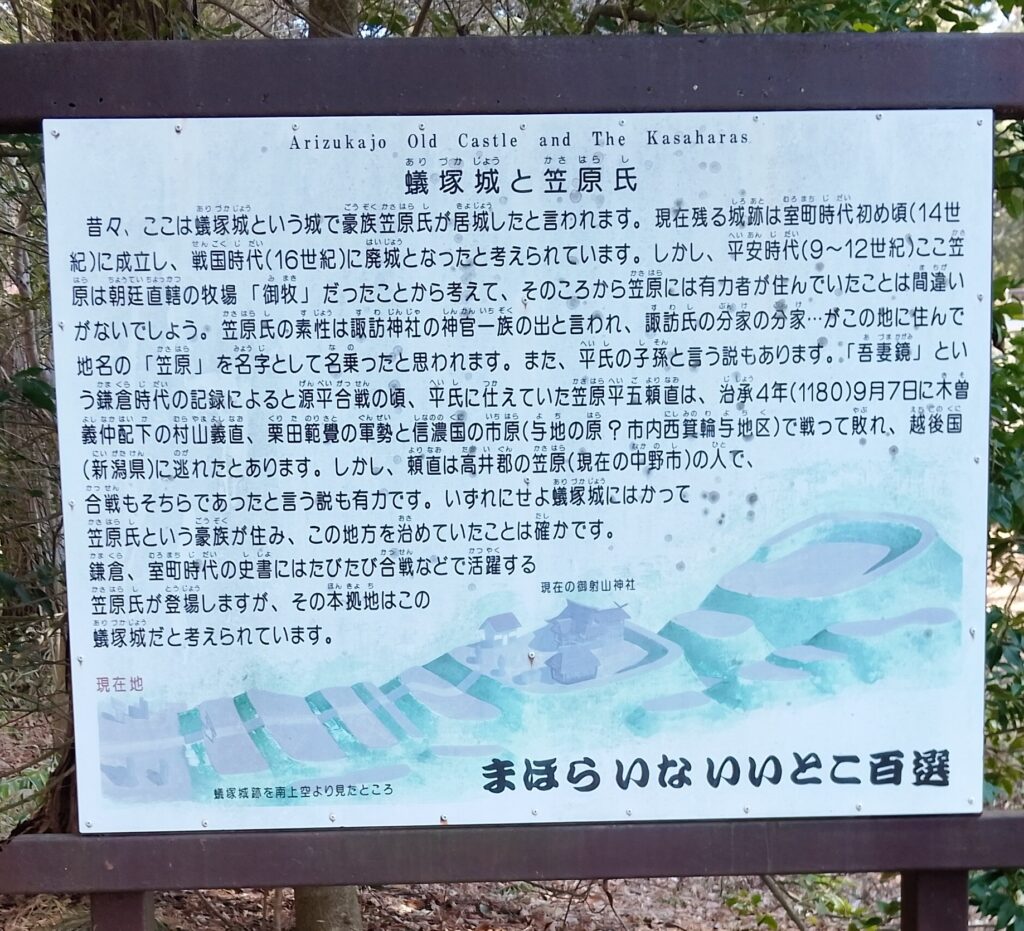
 伊那市美篶笠原に「蟻塚城跡」という史跡があります。伊那市の「まほらいないいとこ百選」にも選ばれています。この城、戦国時代どころかもっともっと遥か昔の平安時代から有力者が住んでいたとか。 詳細は下の写真を見てください

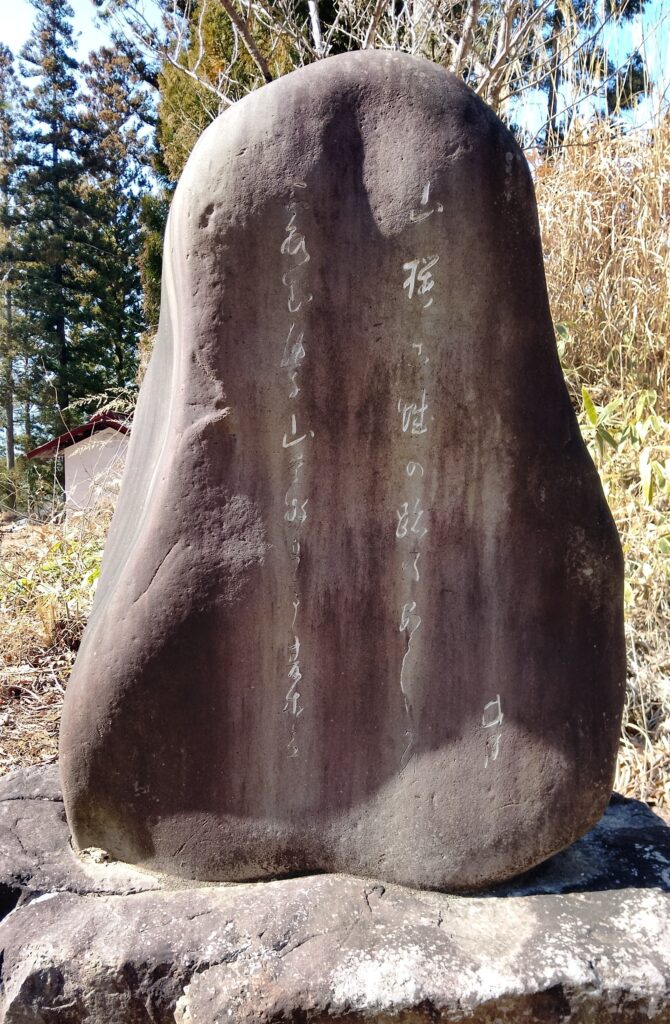
 この蟻塚城跡の一角(御射山神社社屋の裏側付近)に平成26年に建立された井月の句碑があります。

句碑近影                                                                                      Close-up of the haiku monument

ご覧のとおり、この碑には井月の句が二つ刻まれています。〈表〉
As you can see, this monument has two haiku poems by Seigetsu inscribed on it. ‹Front side›
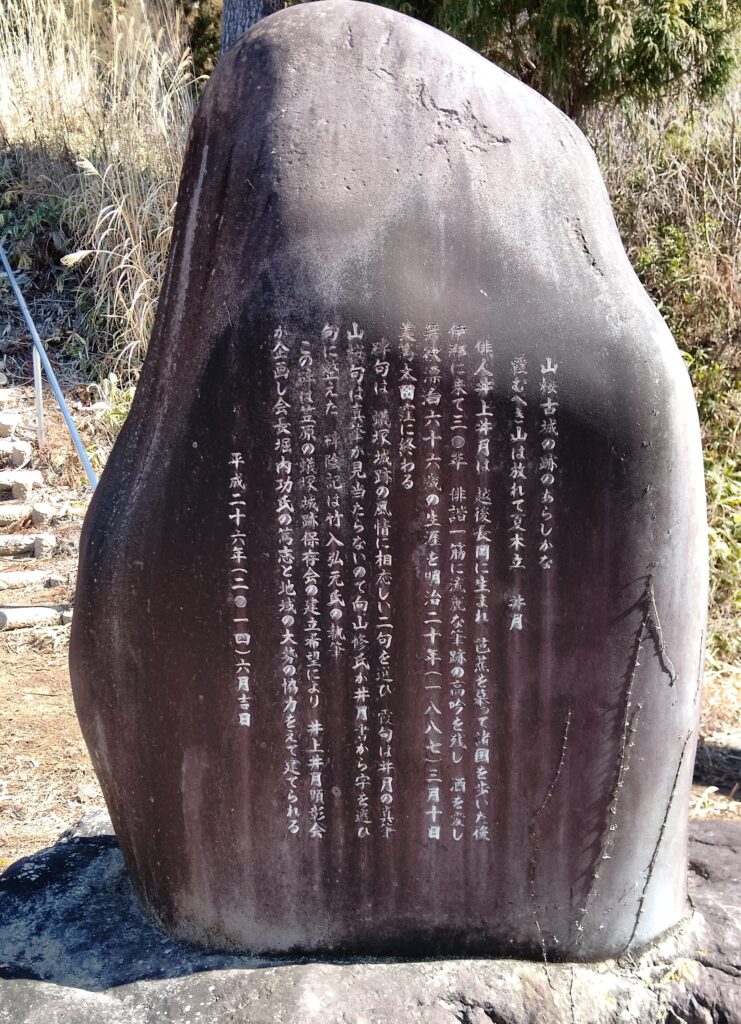
〈裏〉
Back side

井月:今宵の一句                                                                Seigetsu:A haiku for tonight

 ①山桜古城の跡のあらしかな

 古城の跡に山桜が咲いている。強風に煽られ花びらはまるで嵐の如く。
 「古城」がかつての繁栄を偲ばせ、「嵐」が時代の移ろい・・永遠に続くことのない儚さを表現している。たかが山桜、だから「山桜」。

【篶囀の解釈】
●この句は単なる花吹雪の描写ではなさそうである。
●権力と栄華の象徴であった「城」が今は跡形もなく、山桜が何事もなかったように満開になり、そして散る。
●幕末から明治にかけて生き抜いた井月は、明治維新という時代の大波を他人事でなく身をもって肌で体験したに違いない。
●でなければ、この荒々しい一句は生まれていなかった・・・と思う。


①Yamazakura kojoo no ato no arasi kana
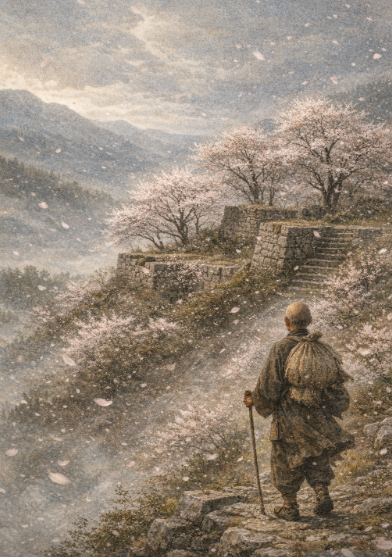
[Enten’s Interpretation]
●This haiku seems to be more than just a description of falling cherry blossoms.

●The “castle,” once a symbol of power and glory, is now gone without a trace, while the mountain cherry blossoms bloom and fall as if nothing had happened.

●Seigetsu, who lived through the end of the Edo period and the Meiji era, must have experienced the great wave of the Meiji Restoration firsthand, not as something distant or unrelated to him.

●Otherwise, this powerful haiku would never have been born… I think.

①栄華を誇った城も今はない。井月の見ていたのは何処の城跡だったのか?(イメージ)【画像は生成AIを使用して作成しています】
① The castle that once boasted such splendor no matter is now gone. Which castle ruins was it that Seigetsu was looking at?

 ②霞むべき山は放れて夏木立

【篶囀の解釈】
 霞という柔らかな春のヴェールが退き・・
 今、霞むはずの山は霞まず、
 夏木立の向こうに
 遠く、くっきり浮かんでいる。

②Kasumubeki yama wa hanarete
natsu kodati

+
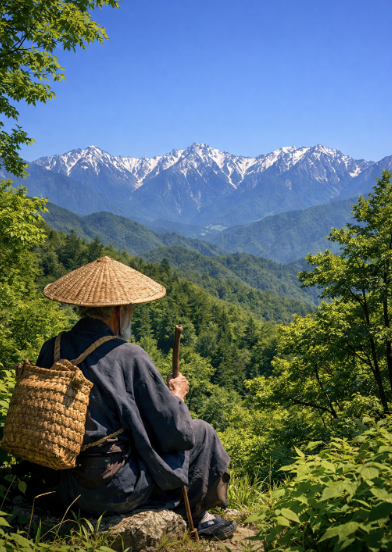
[Enten’s Interpretation]
The soft veil of spring mist has receded…

Now, the mountains that should be shrouded in mist are not,

and they float clearly in the distance beyond the summer groves of trees.

②くっきりと浮かぶ雪の連山を遠望する井月(イメージ) 【画像は生成AIを使用して作成しています】
② Seigetsu gazes upon the “clearly defined snow-covered mountain range.”

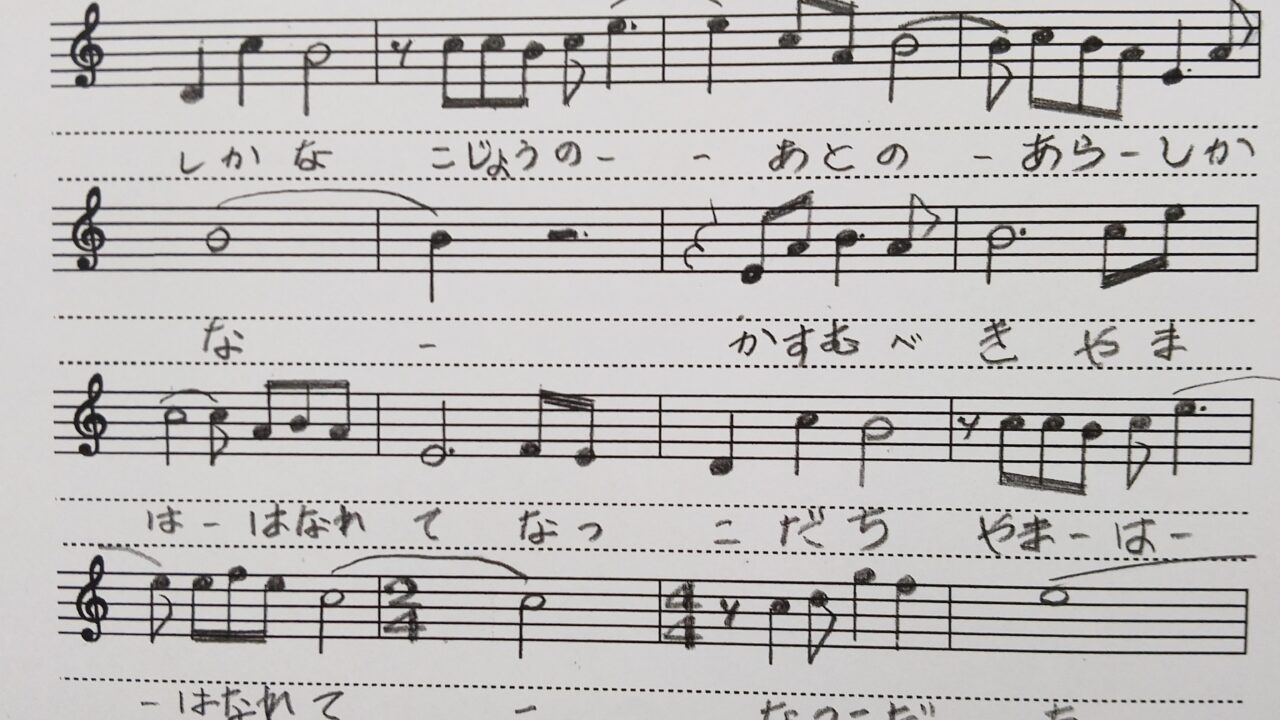
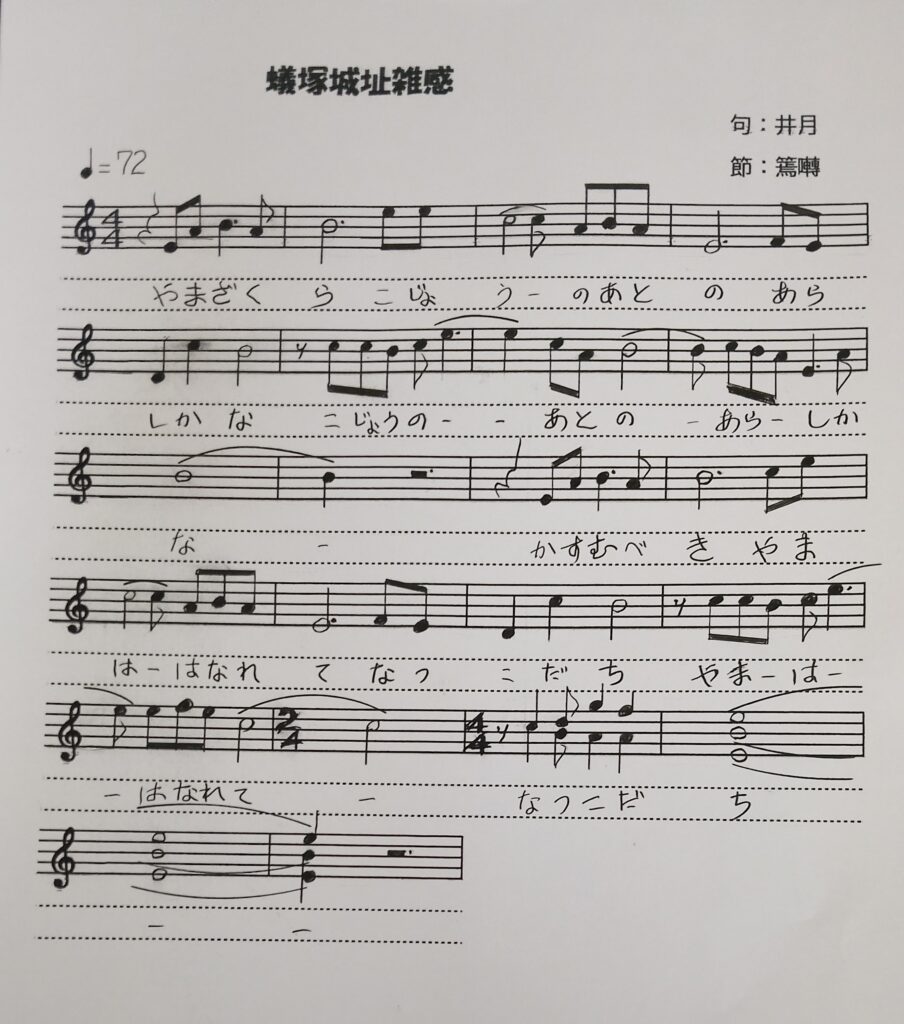
旋律譜:蟻塚城址雑感                              Melody score: Impressions of the Ant Hill Castle Ruins
あとがき                                                                                                                   Afterword

 私・篶囀は節(旋律)を口ずさむときに言葉のアクセントがとても気になります。
 言葉の持つ高低アクセントと旋律が調和しないと落ち着かないのです。この点、いつものように『一句一旋律(曲)』なら容易に解決できるのですが、今宵は『二句一旋律となりましたので、少しばかり工夫を凝らしました。①の山桜に続く「古城⤵」と②の霞むべきに続く「山⤴」とが同じ旋律では納得できなかったのです。(生意気言ってるネ!)

 さて、次回の旋律譜は

 イヨ~ ポンポン

です。

2026.03.01㈰

About this site

○The guide for this blog is Enten(篶囀).
○This blog primarily features haiku by Seigetsu(井月).
○I’m humming the haiku I introduced, with a melody added to it.
○The author of this blog is Kakigui Houryu.(柿食法隆)

ABOUT ME
篶囀 Enten
昔は、還暦には赤いちゃんちゃんこを贈り長寿のお祝いをしていたようです。  さらに古希、喜寿、傘寿・・と長寿の御祝は続くのですが、平均寿命の延びが著しい現代では還暦の祝は「長寿」の祝でなく、「人生の節目」を祝う意味合いが濃くなっているようです。  我が家でも「60・70は鼻たれ小僧」とばかり、御祝の『お』の字もなく淡々と過ごしてきました。  私は還暦で第一の人生に区切りをつけ、『ご破算で願いましては・・』と第二の人生をスタート。(気持ちだけですが・・・)  第二の人生においても既に鼻たれ小僧を通過して今や「中学1年生」、思春期真っ只中です。  (o^―^o)ホホ   あれもやりたい、これもやりたいと、好奇心の塊で今は「井月」に熱中しています。